QR Codes for Live Events and Meetups
A live event hands you a room already paying attention. A QR code is how you keep that attention after everyone walks out.
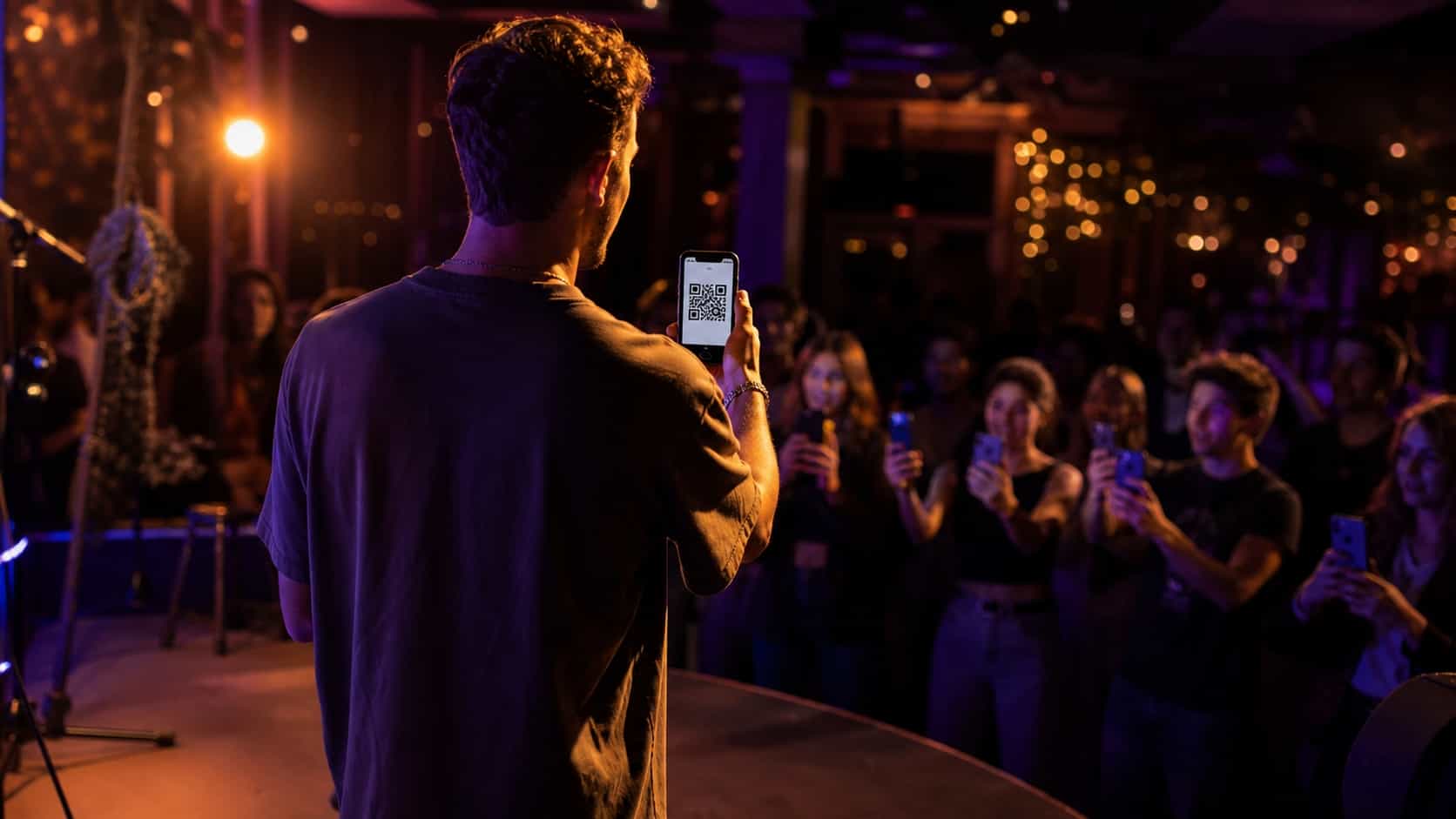
A live event is the rarest thing a creator gets: a room full of people already paying attention to you, at the same time, in the same place. And then it ends. People walk out, the moment cools, and most of that attention never turns into anything.
A QR code is how you keep it. Not as a gimmick on a slide, but as a deliberate moment in the event where the room converts from an audience into an actual connection you still have next week.
Why events are prime scan moments
Every other placement fights for attention. At an event you already have it.
Three things line up at once that almost never line up elsewhere. People are stationary, so they can actually aim a camera. They're already interested, so they don't need convincing. And there's a natural pause built into the format, whether it's applause, a transition, or the end of your set.
That combination is why event scan rates run far above posters or merch. You're not interrupting anyone. You're giving them something to do with the interest they already have.
Stage and screen display tactics
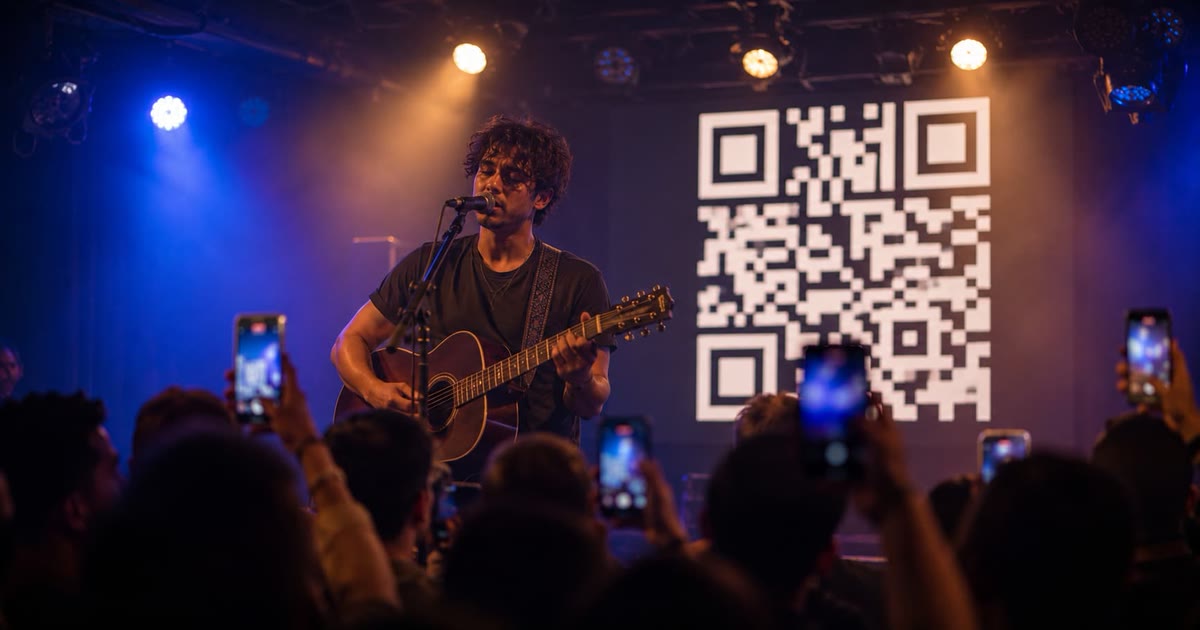
If there's a screen, use it. A code on a projected slide or LED wall reaches the entire room simultaneously, which no printed piece can do.
Size it for the back row, not the front. A code that works from three meters is invisible from twenty. When you don't know the room, oversize it. There's no penalty for a code that's too easy to scan.
Keep the area around it plain. Busy backgrounds behind a code make phones hunt, and people give up in about two seconds. High contrast, plenty of clear space, and hold it still. An animated or transitioning slide cannot be scanned.
If there's no screen, a printed code on the front of the stage or on a stand beside you covers the front rows, which is usually where the most engaged people are anyway.
Handouts, badges, and signage
Not every event has a screen, and not every moment is a stage moment.
Table signage works at markets, fairs, and merch tables where people are already standing close and browsing.
Badges and lanyards turn every attendee into a small distribution point. Effective at conferences where people are already scanning each other.
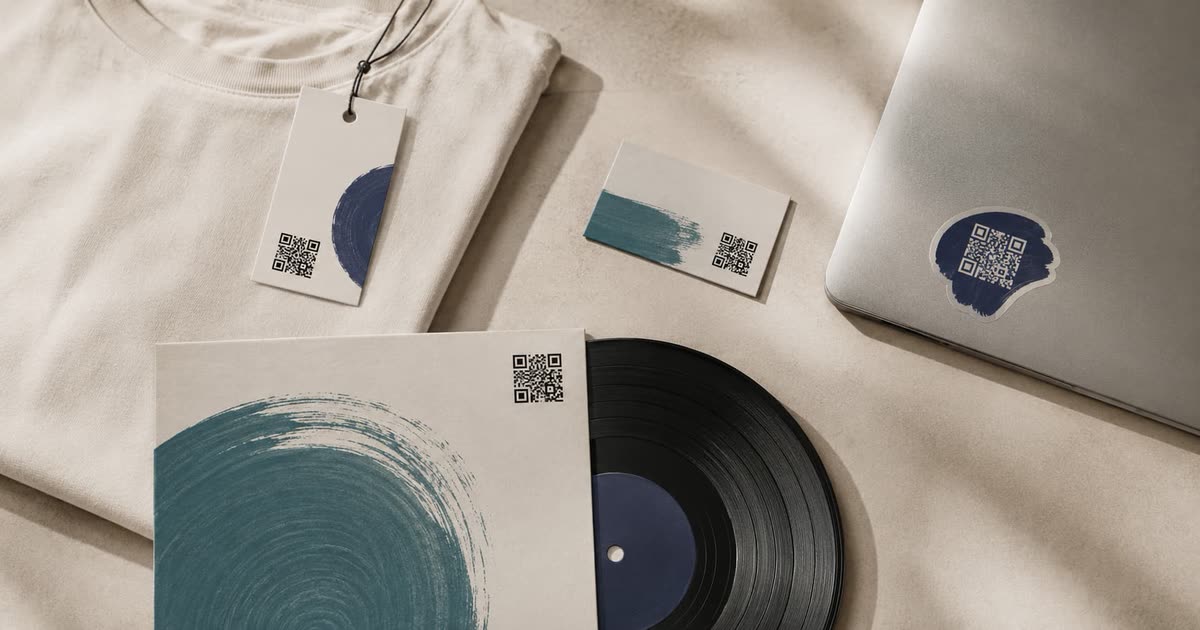
Flyers and cards are the one placement people carry home. This is the format worth spending on, because it survives the event.
Table tents at seated events get scanned during the downtime before things start, which is otherwise dead time.
Timing your call-to-scan
This is the part most creators get wrong. The code goes up at the end, during the applause, when everyone is already reaching for their bag.
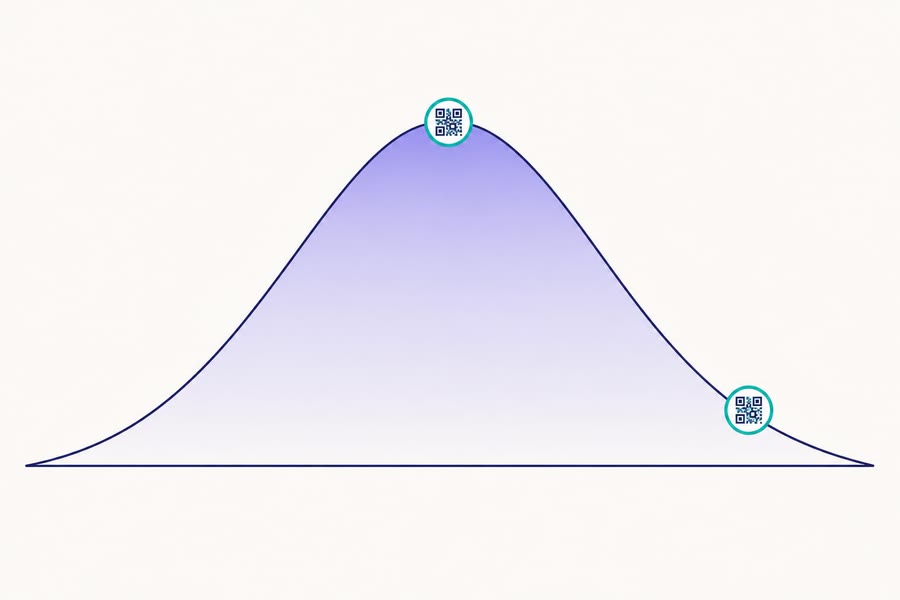
Show it earlier. The strongest moment is right after your best moment, whatever that was in your set: the song people react to, the story that lands, the demo that impresses. That's when interest peaks. Say what the code is and leave it up.
Then show it again at the end. The second showing catches everyone who meant to scan and didn't.
Say what you want out loud. "Scan this to follow me" outperforms a silent code by a wide margin, because it tells people the code is for them and that scanning now is the expected thing to do.
Giving people a reason worth the effort
Getting a phone out is a small cost, and people weigh it. "Follow me" is a fine reason. A concrete reason is better.
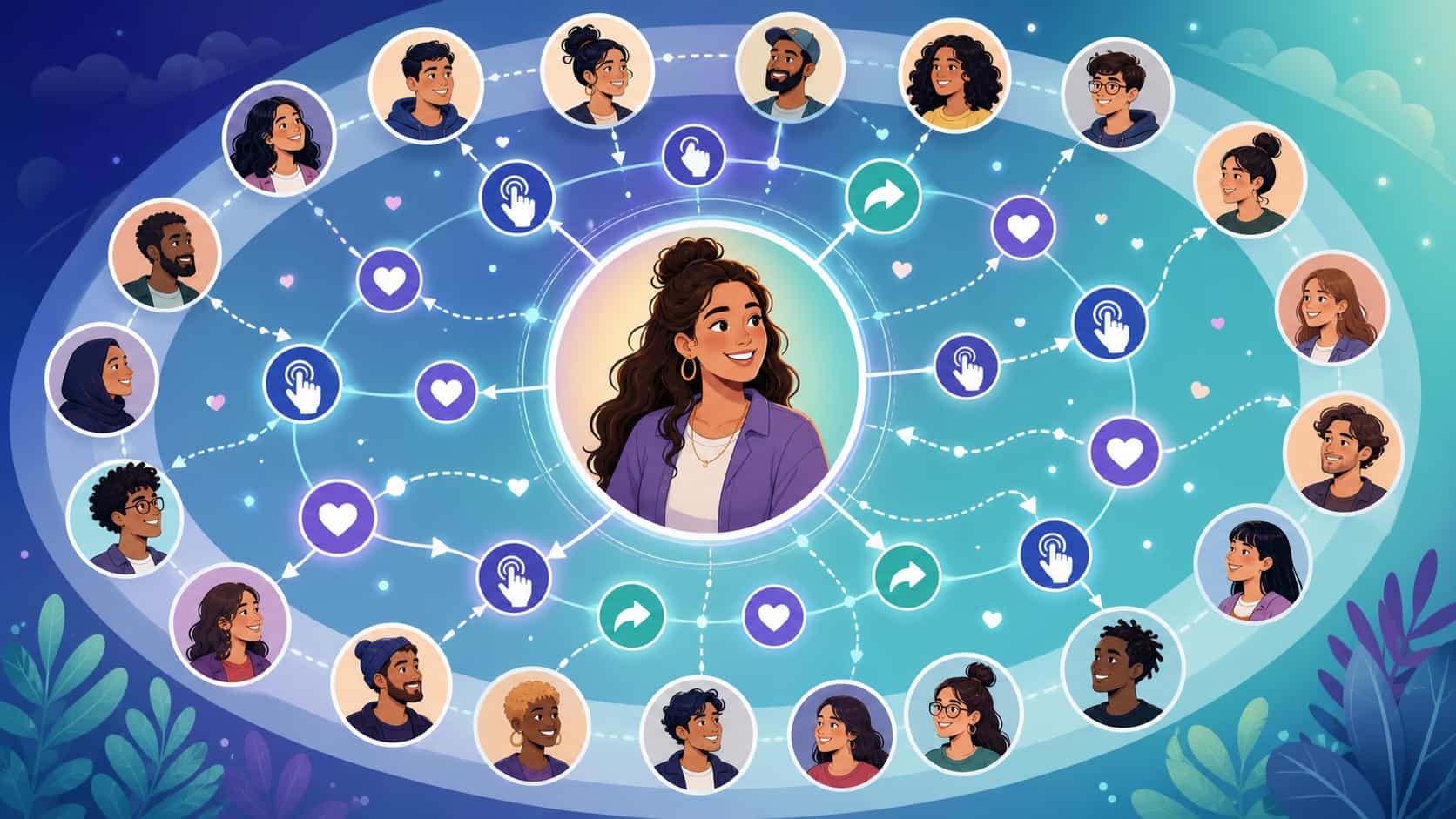
VISU profiles support rewards for audience interaction, and an event is where that fits most naturally. A scan that hands someone a reward for showing up turns a passive room into a room with a reason to act right now, while you're standing in front of them. Unlike a follow, which people intend to do later and forget, a reward is claimed in the moment.
The same logic works with anything that has real value attached: the recording of tonight's set, a discount on the merch table ten steps away, early access to whatever comes next. What matters is that the thing on the other side of the scan is worth the ten seconds, and that it's clearly tied to being here tonight.
Capturing follows before the moment passes
Scans are not the goal. What happens after is.
Send the code to your profile, not a single link. Someone who just watched you perform wants to see what else you do, and a profile answers that where a single link is a dead end.
Make sure the profile matches the moment. If people are scanning at a show, your music should be at the top, not buried under links you added months ago. Reorder it before the event; it takes two minutes and decides what a first-time visitor sees.
Assume the venue's connection is bad. A heavy page that stalls on crowded event wifi loses the scan entirely.
Post-event follow-up
Check your scan data within a day or two, while you still remember how the night went.
Look at when the spikes happened. If most scans came after your third song, that was the peak moment, and next time the code goes up right there. If the end-of-set showing outperformed the mid-set one, the reverse. Two or three events and you'll know your own pattern.
Compare across events too. A code that pulls well at intimate venues and poorly at large ones tells you something about how close people need to be, and it changes how you display it.
For the placement mechanics behind all of this, see where to place your creator QR code, and for the full strategy, start with the QR campaigns guide.
Frequently asked questions
When should I show the QR code during a set?
Right after your strongest moment, when interest peaks, and again at the end to catch everyone who meant to scan and did not.
How long should it stay on screen?
Long enough for the back row to notice it, unlock a phone, and aim. Keep the frame still, since an animated slide cannot be scanned.
What if the venue has bad signal?
Make the destination lightweight. A heavy page that stalls on crowded event wifi loses the scan entirely.
Why give a reward for scanning at an event?
A follow is something people intend to do later and forget. A reward is claimed in the moment, while you are still in front of them.